Gunilla stole the name Verk och dagar (Works and Days)
Gunilla Heilborn describes Verk och dagar (Works and Days) as a choreographic investigation in which she examines her This is Not a Love Story with the help of film, projections and live interviews. It becomes something new that rests on something else, something older.
It will be a mix: some of the old and some new elements. Gunilla wants it to be open – to see where it ends up.
Works and days in your own words are...
"A multimedia, grand and chaotic choreographic investigation in two parts with an interval," says Gunilla, asking if I would like the longer version.
Gladly.
– Formally, it is based on my desire to combine what I perceive as two strands in my artistic practice – solos with me on stage versus productions with other performers on stage – into a performance with two acts and an intermission. The first part features me as an investigator with image and film projections in a kind of lecture performance, and the second part features dancers Ludvig Daae and Sophie Augot performing choreographed material and texts in a number of grand theatrical spaces. Themes in Works and days is partly an investigation of an old work, partly reflections on travel, hospitality and our relationship with people in other times.
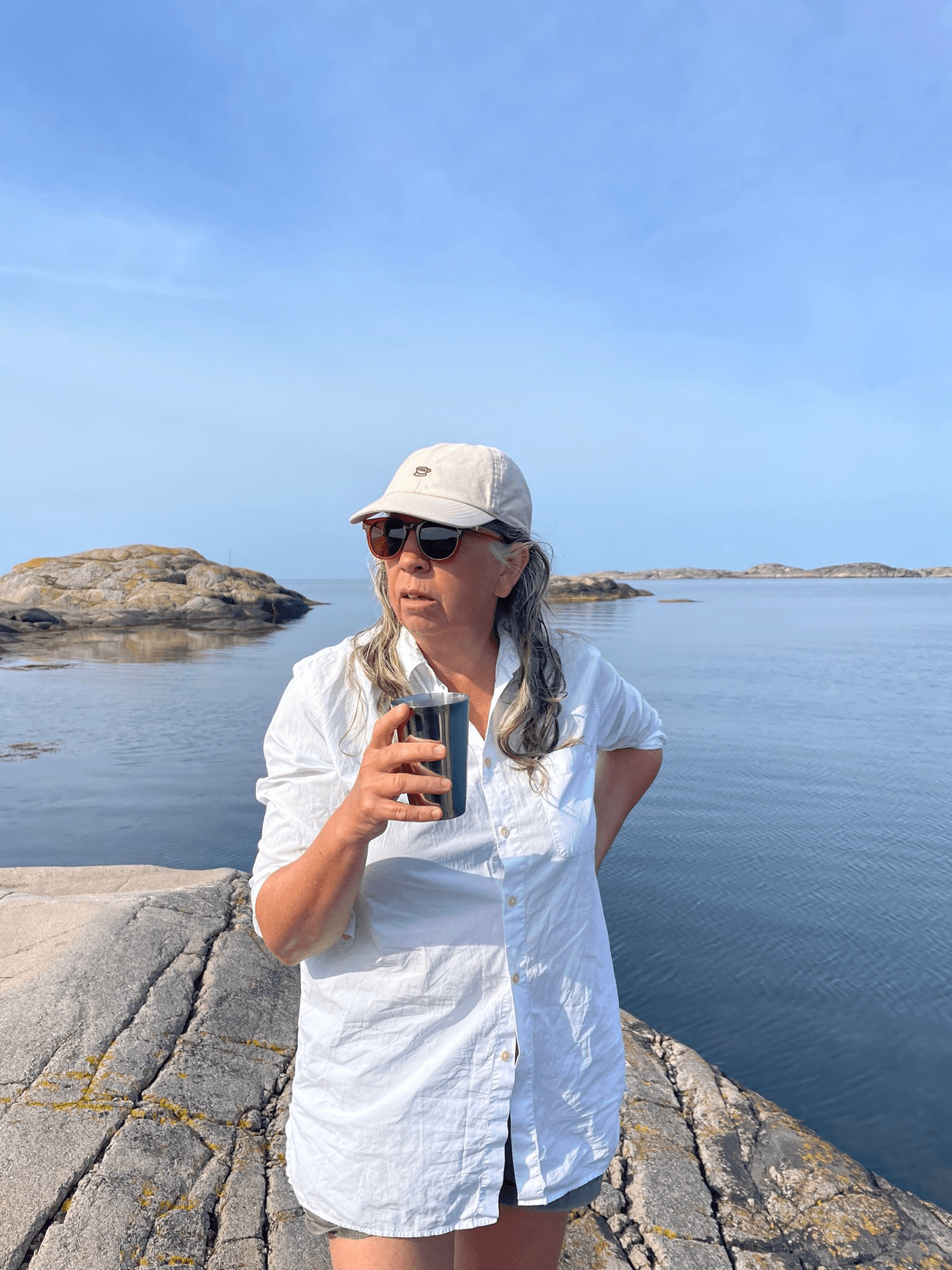
We'll talk on the phone. In August 2025, Gunilla started one of her upcoming three residencies with the dancers in Vitlycke, Bohuslän. It is located near the Norwegian border, which is convenient as one of the dancers and the composer are from there. Gunilla says that the studio and the environment are very nice and good, and tells me that they have just taken a morning dip when I call. She sounds lively and talks quickly, but it is easy to keep up.
Can you tell us what you want to achieve with Works and Days?
I hope this can be a performance that tells the story of how a work came into being, while also raising questions about the nature of travel, and ultimately captivating the audience with visually stunning images featuring two fantastic dancers.
Was there anything in the old material that you needed to see again?
- This is Not a Love Story It is one of my shows that has toured the most around the world, and I have seen it so many times and often thought that the audience does not know all the background, references and stories hidden in the fragmentary texts and scenes of the show. What the audience sees are only the lines that remained, which works well in the performance, but there are so many funny stories, interesting facts and silly thoughts from our travels there that I would like to revisit and share.
She has begun to unravel the text from the performance to see how she and her gang can not only describe what lies behind it, but also use it as inspiration to create new material.
Memories of thunderstorms, birdsong on an early morning in Lisbon, or thoughts about Nansen's polar expedition in the winter of 1896 can serve as starting points for the scenic images we wish to create.
– We can reuse and renew the specific method we used to create choreographic material at that time.
Is there anything, perhaps unexpected, that inspires you?
No. Because I always think that everything that happens to me, everything I read and see, can become material. It's incredibly luxurious. For example, I recently read about an American translator who described how Proust used incredibly long sentences. And then I thought it would be exciting to try out long sentences. I'm inspired by everything around me, but actually rarely by other dance works, perhaps because they're too close to home, she says with a question mark.
Speaking of ancient times: ancient Greece. To what extent have your studies of antiquity influenced which fragments you choose to highlight now?
– I stole the title Works and Days. It is a poem written 700 years before our time by the Greek poet Hesiod. I think it is a very good title. Works and days are exactly what life consists of. Our days and what we do during those days. Borrowing a title from ancient Greece also has a special meaning for me. For as long as I can remember, antiquity has been one of my great interests. Last spring, I took a course in Ancient Philosophy at Stockholm University to learn more about the thinking of that era. For me, going back in history and looking at how other times have reasoned is an effective way to gain insight into our own time. How did they do it, how do we do it? How did they think, how do we think? Ultimately, my focus is on looking at our own time. To gain insight into ourselves.
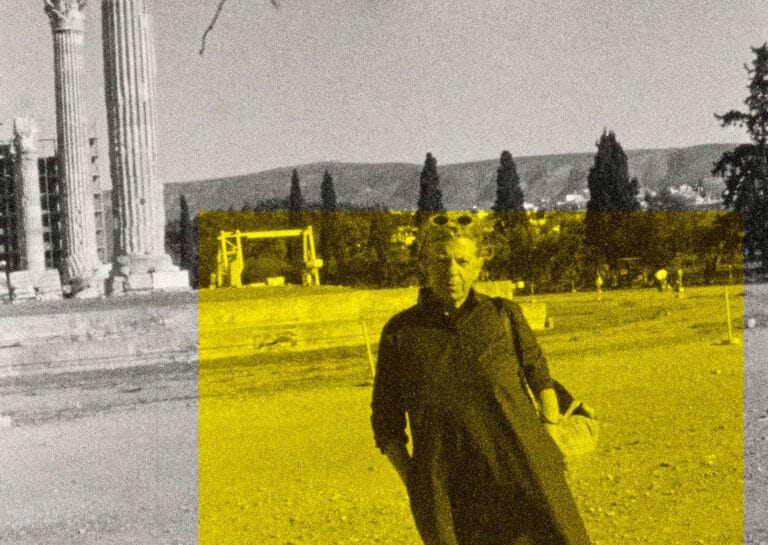
She says that in the autumn of 2024, she travelled around Greece to ”an incredible number of ancient sites and photographed pillars and columns, ruins and olive trees, standing there and soaking up the atmosphere.”
At the same time, I read The Odyssey and was completely blown away. It's really not just about sirens and cyclops, but more about hospitality and how a traveller is received in different places. This is a theme I want to explore further in Verk och dagar. So The Odyssey will most certainly feature. It was actually already referenced in This is Not a Love Story, where K says:
I have read The Odyssey. All 24 songs. It was very moving. When did I write something that means something to someone?
"That wasn't true. None of us had read it at the time. But now I have," says Gunilla, who has also travelled past Ithaca by boat early one morning and seen the blue mountains described by Homer.
She predicts that, in addition to the Odyssey appearing in the work, there will certainly be something about Socrates, Plato or Aristotle too do it.
"Or why not some Epicurean or Cynic ideas?" she wonders.
Which movements best convey the theme? About memory and forgetting?
I never think about dance or movement expressing a theme or describing something. For example, I don't know how dance could describe forgetfulness. Of course it could, but I don't think that way at all when I'm creating a piece. Dance often comes about in a more abstract way, but of course there are thoughts about tempo and repetitions and such. But I don't know what kind of movements it will be. This time there will be some dancing. So we'll have to work on it. I always work on the movement material in very close collaboration with the participants. It will be exciting to see where we end up this time.
Do you agree that you balance between performance and stage dance? If so, what does that mean?
She says she disagrees.
– Performance is not the right description of what I do. For me, performance is something more unrehearsed that may only happen once. I think of what I do more as performing arts and performances with a lot of different content. It can be dance, text, film, songs or a lecture. Laurie Andersson once suggested that it's good to say that you're involved in multimedia, because then you can put whatever you want in there. That's exactly how I feel. I love film and images, I enjoy writing and exploring dance, light and sound. I'm obsessed with research and diving into different themes. It's wonderful to be able to use what I'm interested in right now and shape it into a performance. Then I work very hard on how the different ingredients are put together. The dramaturgy. The tempo. The humour.
And today's audience – how do they react compared to the past?
– Perhaps the audience is a little less conservative about what they might see on stage. Or I don't know, it's hard to say. In Sweden, many people know me now and are often prepared for it to be fun, so they laugh easily. When we've played for audiences abroad who don't know us, they often sit there a bit puzzled for a while before they grasp what they're watching. Maybe I use a form that they weren't prepared to see.
What lessons have you learned over the years?
– I constantly think that I should finish things earlier. It always ends up being incredibly stressful at the end. For me, that is. But I have to realise that this is simply my way of working. Change, change, change. Fortunately, I have a team that knows me and is used to me making a lot of changes at the last minute. I have enormous faith in them, and they understand my process. So we usually get it done in the end. With bated breath.
Is there anything you wish you hadn't done? Any work?
"How delightful," she says. "Or what a delightful question! No, I haven't released anything that I felt was completely satisfactory. However, sometimes it may have been too long or felt awkward. But then I changed it after the premiere. That's what I find enjoyable, tinkering with it.".
Which part of the creative process do you try to avoid?
– I find it difficult to create material! As soon as there are things to work with, we can start editing and testing.
Then it's time to wrap up and wish the team good luck. Because now the last dancer, Ludvig Daae, has arrived at the residence to start recapping and creating Works and Days.