A key to another world of thought
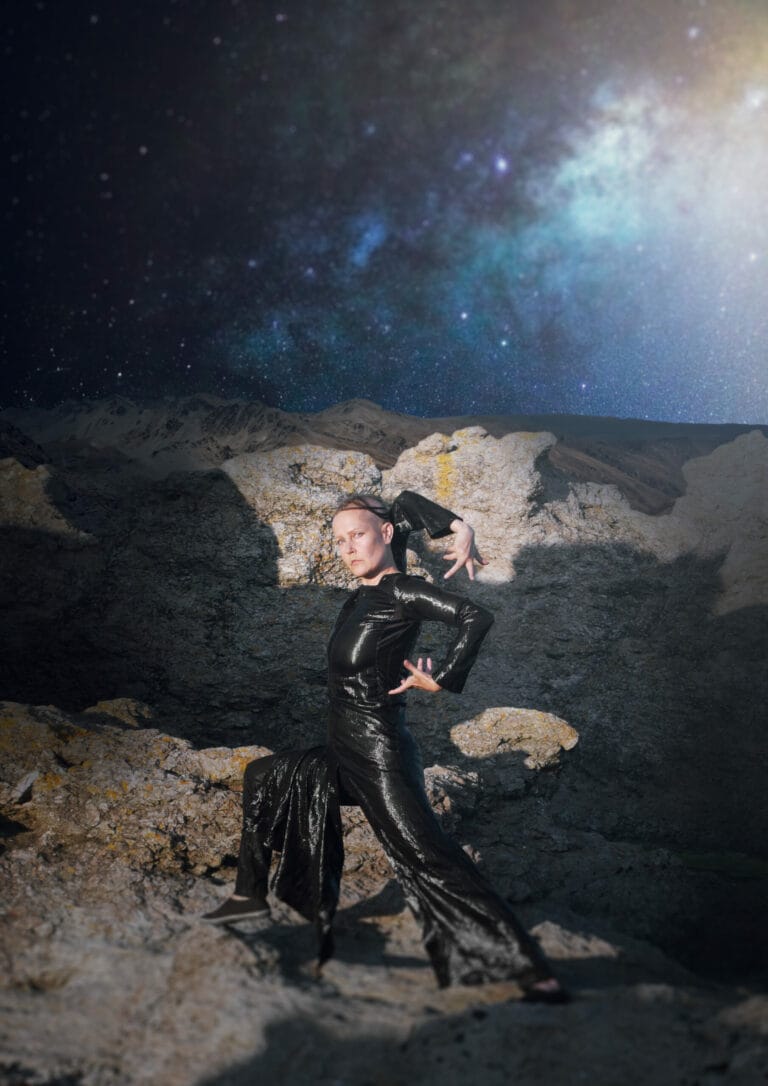
Forty years on stage and still searching for new forms. Virpi Pahkinen celebrates her anniversary with works that move between cosmic spaces and inner landscapes. Or, as she herself puts it:
The dance should be inspiring and pregnant with meaningful secrets. The words may be quick on the surface, but the dance communicates with the depth and speed of the soul.
…what does she mean, would she like to elaborate?
"I'm not going to chew it up for you and serve it to you like baby food. If you delete half the sentence, the words may seem a bit abrupt, but it will be better," replies Virpi.
Perhaps that made it clearer.
How has your relationship with the audience changed over the years?
– It hasn't changed; I feel just as much responsibility for every second on stage now as I did then.
Some questions get shorter answers. Like a ”no” to the anniversary question, which has made her think differently about her stage presence. And when she says that over the years she has created her own universe simply by following her calling.
Let's tackle a big question. How do you view the role of dance in the world? A refuge, a protest, a spiritual act, or something else entirely?
There is too little dance in the world. It can play all the roles you mentioned above. I am weary of seeing everyone hunched over their smartphones, the only movement being that of a finger, the simple swipe. Their bodies don't look happy. The art of dance is unique. It is also effective in that it activates mirror neurons and can convey knowledge and help people access their spiritual spaces. Dance can offer a key to another world of thought, beyond that which words can express.
Virpiversum spans several rooms and expressions. How did you choose what to include in each scene room?
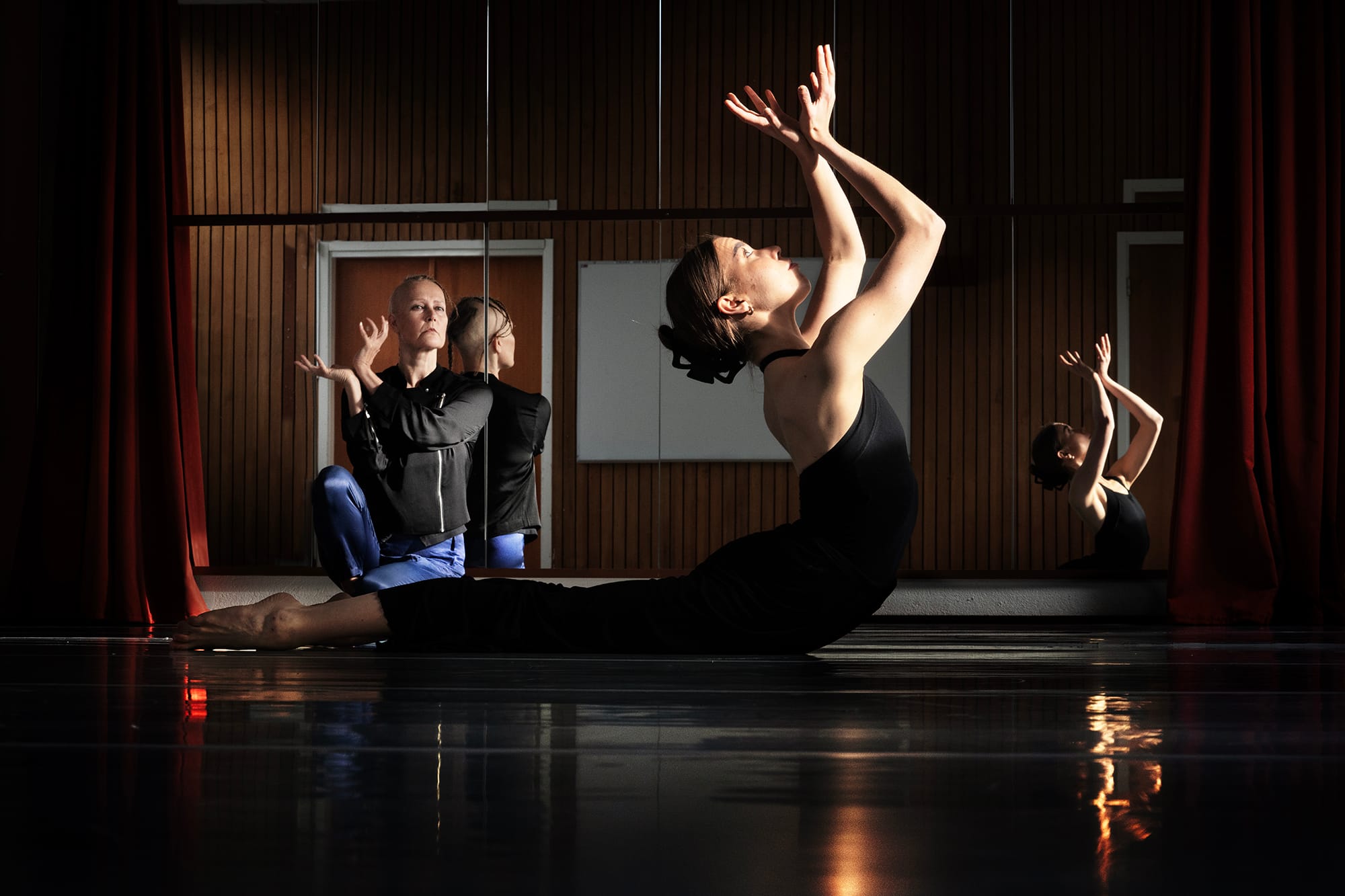
– The world premiere will, of course, take place on the Main Stage; I really love that stage space. Then young dancers will perform solos in the Black Box. There will be a brand new solo for Vanessa Lindblom, while William Nylind will perform a solo that has been around for a couple of years. In summary, there will be shamanistic groove, the human body in poetic geometry and some delicate plants. Bright mysteries and mysterious light, says Virpi.
The fact that Virpi refers to Dansens Hus Stora Scen as the obvious venue for a world premiere shows how at home she feels there. Many of her works have seen the light of day here. She made her debut at Dansens Hus in the 1990s, when its founder Jan Zetterberg was director. It was also through Dansens Hus that she came into contact with her first producer, Birgitta Ström, with whom she worked for 20 years.
During the Virpiversum days, films will also be shown. There will certainly be some clips from, for example Bardo (1998), Virpi explains, recounting the tragicomic story behind the work.
Bardo was a hit on the main stage at Dansens Hus with dance stars Patrick King and Shen Wei, but it didn't really take off. It didn't go on tour because of poor basic funding and freelance dancers who were working elsewhere. We couldn't afford to transport or store the amazing set design by Jens Sethzman. It was a tough lesson. I then decided to tour with just a lighting technician and that everything we needed would fit in hand luggage. Birgitta laughed when she saw how I travelled around the world with my fee in cash in my pocket and my costumes in a plastic bag.
And there will be piano playing.
You are a classically trained pianist, but you don't play as often as you dance. Why are you doing it now?
– Sometimes it's good to take a proper break! After one, even the most tedious shell exercises feel great. Now things have started to blossom on the composition front without me actively trying. I can't help it that I sometimes wake up in the morning with a melody in my head.
Do you use specific movements from previous works? Which ones? Why?
"Certainly, there are recognisable movements that are part of my vocabulary, which I stretch, rhythmise and rephrase. My hope is that the variations are interesting enough," says Virpi, laughing and pointing out that she cannot change her dance DNA.
"Why does Bach sound like Bach? Is there a problem with that?" she asks rhetorically.
How do you feel about the image of yourself as a magician/shaman/goddess?
– If I succeed in creating images that lift you out of the daily grind and help you switch off, then that's great.
You have written two books. How has your writing style changed compared to Ormbäraren, your first book, which was published 15 years ago (2013 in Swedish, translated by Mattias Huss)?.
I continue to take notes and am a periodic reader and writer. Comparatively speaking, the first book contains more erotic escapades, tunnel vision and serpentine powers, while the new book Visp: blå linjen till Sombrerogalaxen (2025) has the spider's broader and more flexible perspective; more humour and vortex, and a little more death, says Virpi with a smile.
If you were to revisit an old solo from your archive, which one would you revisit and why?
I have a 25-year-old piece in my repertoire that I still dance, called Prayer or Angel. It fits in different contexts and can be adapted to different music. It's actually my simplest piece, but it seems to work in the long run and awakens the spirit.
Is there any new area that inspires or attracts you at the moment?
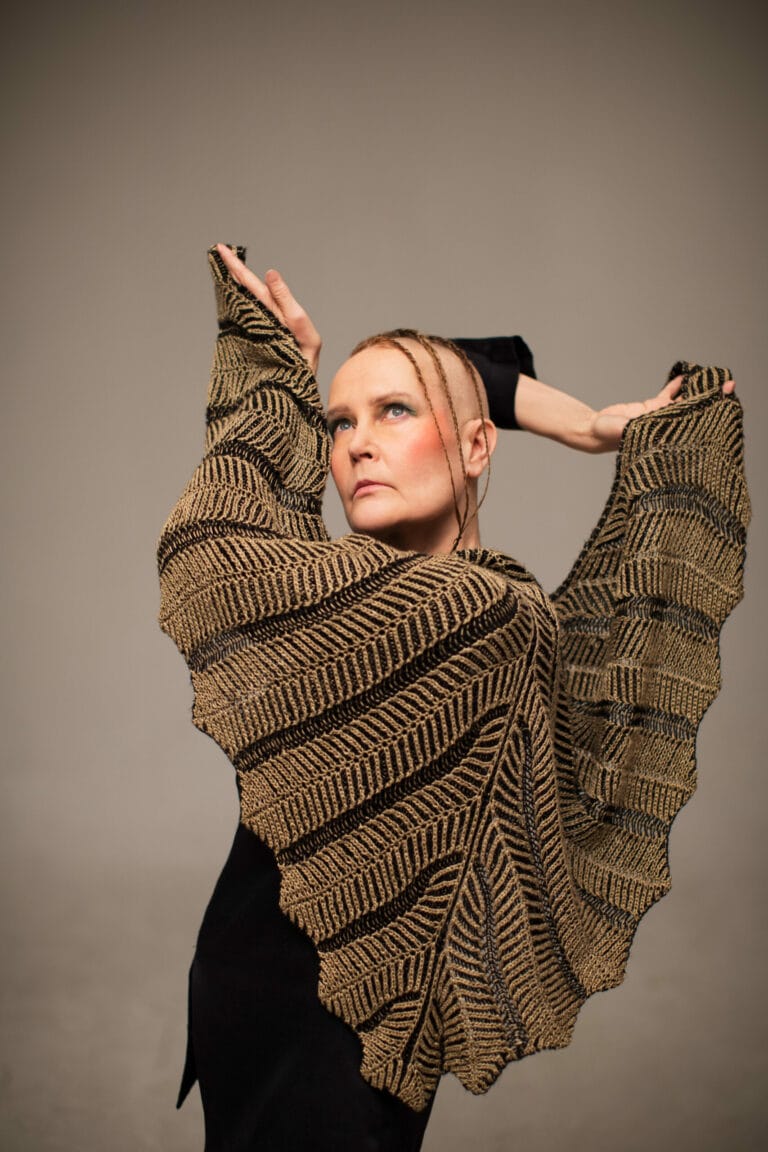
– I'm working on some music. A bunch of songs are just coming out of me right now, so I'm sketching them out on an old electric piano in a tiny storage room. And with knitting, there's always something new to learn; patterns with intricate mathematical calculations and flexibility.
Do you have any dream projects that you haven't done yet? I understand that you don't want to reveal your dreams too quickly, but perhaps you could give us a little hint?
– Create works for ballet or large ensembles within the framework provided by the institutions.
What would you like to leave behind as your artistic legacy?
– A street or a winding road named after me.