Back to the Future: Dancing Antigone Sr. Again
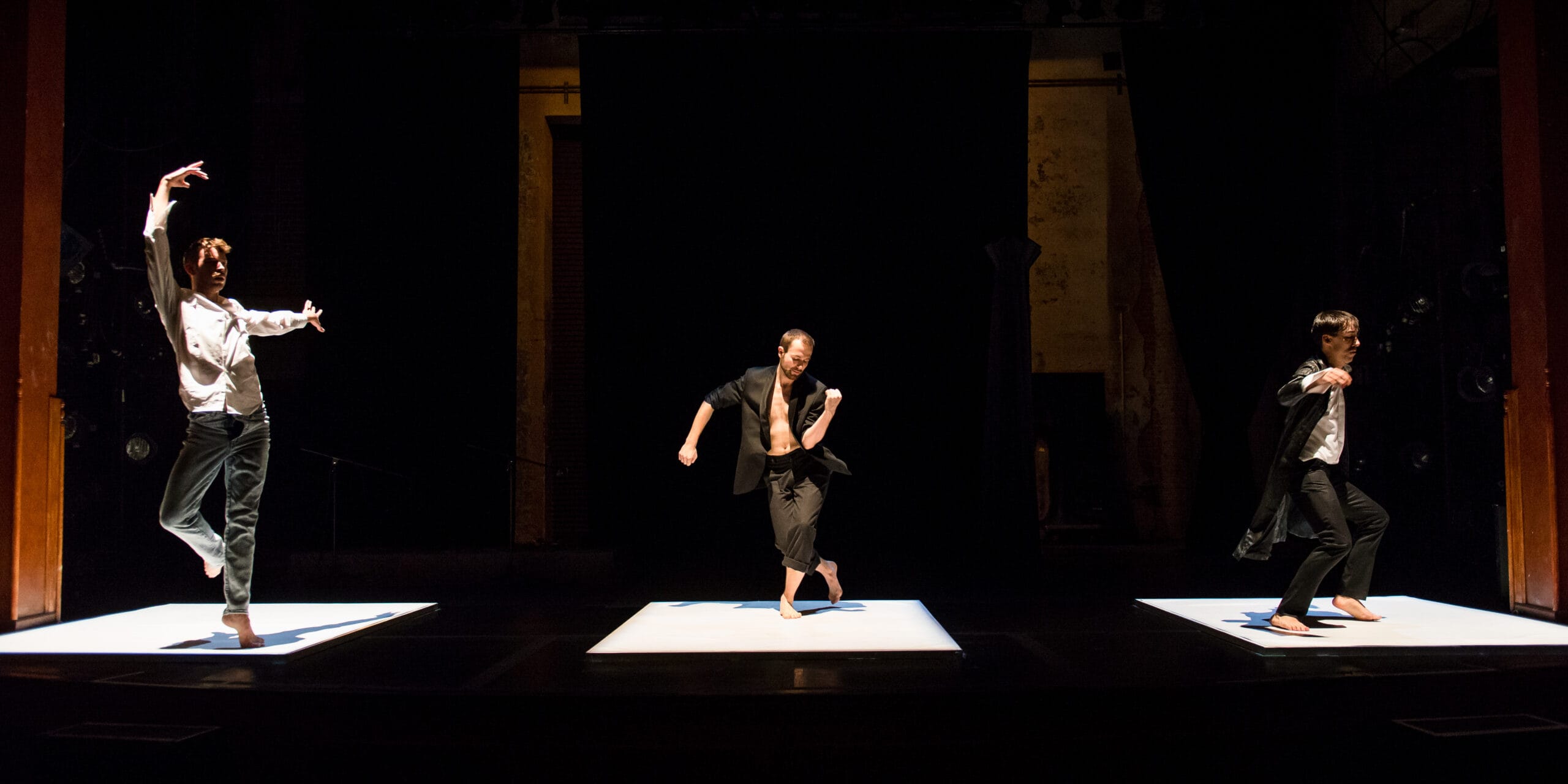
In 2026, the work Antigone Sr: Twenty Looks, Or Paris Is Burning at the Judson Church (L) was to be performed at Dansens Hus. It was created by choreographer Trajal Harrell. When it premiered in 2012, it quickly became an iconic part of Harrell's seven-part series. The work stages a fictional encounter between postmodern dance at Judson Church and the world of voguing in Harlem ballrooms.
Dansens Hus recently met with one of the original dancers from the work, Stephen Thompson. In conversation, he reflected on what it means to return to older works that live on in memory, in the body and in a changing cultural context.
But how does he feel about the work today – especially given the nervousness he himself has described ahead of its return?
Stephen, who has collaborated with Harrell for many years, describes how Antigone Sr. was created in a different time and context. The work toured extensively, gained visibility and success – but without any thought that it would be revived almost two decades later:
– Returning to the work raises some uncertainty. At that time, my body had a certain capacity, both technically and in how I embodied authenticity versus representation – something that is still part of both my own practice and Harrell's. What do I need to modify now due to age and changes in my body? And politically – what was the content of the material then, how has it aged or changed, what does the discourse on appropriation and body politics look like today versus yesterday?
These arguments raise interesting questions about dance history and dance as an art form in general – about different ways of understanding the archiving of dance (in written and non-written form), as well as about the dancer's own ownership and practice. Stephen reflects:
We are fortunate in the Swedish dance scene to have someone like Chrysa Parkinson, an incredibly inspiring artist who has really helped dancers understand that they have their own practice – even within other people's artistic projects or choreographic works. That this practice can actually be transferred to, and incorporated into, other people's choreographies. She has truly inspired an entire generation.
Like all performances, Antigone Sr. was born at a specific cultural moment — one shaped by Harrell's thought experiment about the meeting between Judson Church and Harlem ballroom. Over time, these contexts change and the work takes on new meanings when it meets an audience again many years later:
In creating the work, Trajal succeeded in activating what he calls historical imagination, where different themes and ideologies could be woven together – postmodern dance from New York, Greek theatre and codes from the voguing scene in Harlem. Runway has always been a central part of Trajal's work. At that time, it functioned as a conceptual approach. But since then, voguing has evolved enormously – both within its own community and in relation to popular culture, accessibility and dance as an art form. The question today is: how can we approach this in a careful and respectful way – without appropriating – and instead highlight the aspects of voguing that are more universal, such as the idea of realness and a certain kind of intense performativity?
More than fifteen years have passed, and I hope that audiences now view the work with a retrospective eye. Stephen goes on to describe how there was a sincere naivety in mixing different expressions, while caution was always present:
We never saw ourselves as voguers, nor did we try to imitate voguing or drag queens. Instead, we moved in a kind of liminal space, where the focus was on contemporary expression and performativity. We became a mirror of our time, shaped by everything we grew up with: television, music, music videos and a variety of dance forms, such as classical, hip hop, rave, Trisha Brown, non-dance, jazz – but also by questions of gender and cultural expression.
When Thompson looks back on the early years with Antigone Sr., the innovative, experimental nature of the work also emerges, as does how it grew out of Harrell's larger series Twenty Looks, in which the same theme is explored in different ”sizes”:
It was very experimental at the time, precisely because Trajal was experimenting with different forms within the Twenty Looks series. He had the intelligent idea of creating several versions on the same theme, in sizes from XS to L – a clear connection to the world of fashion, which is a recurring theme in his work. Everyone buys clothes, so everyone can relate to it. We became part of a conceptual project that was bigger than a single performance, which was new to the dance field. The first version was two hours and forty minutes long. Then it got shorter, because all the touring gave us the opportunity to edit and condense the material.
And he remembers the audience's strong response – like when the entire theatre in Rio de Janeiro stood up and started dancing:
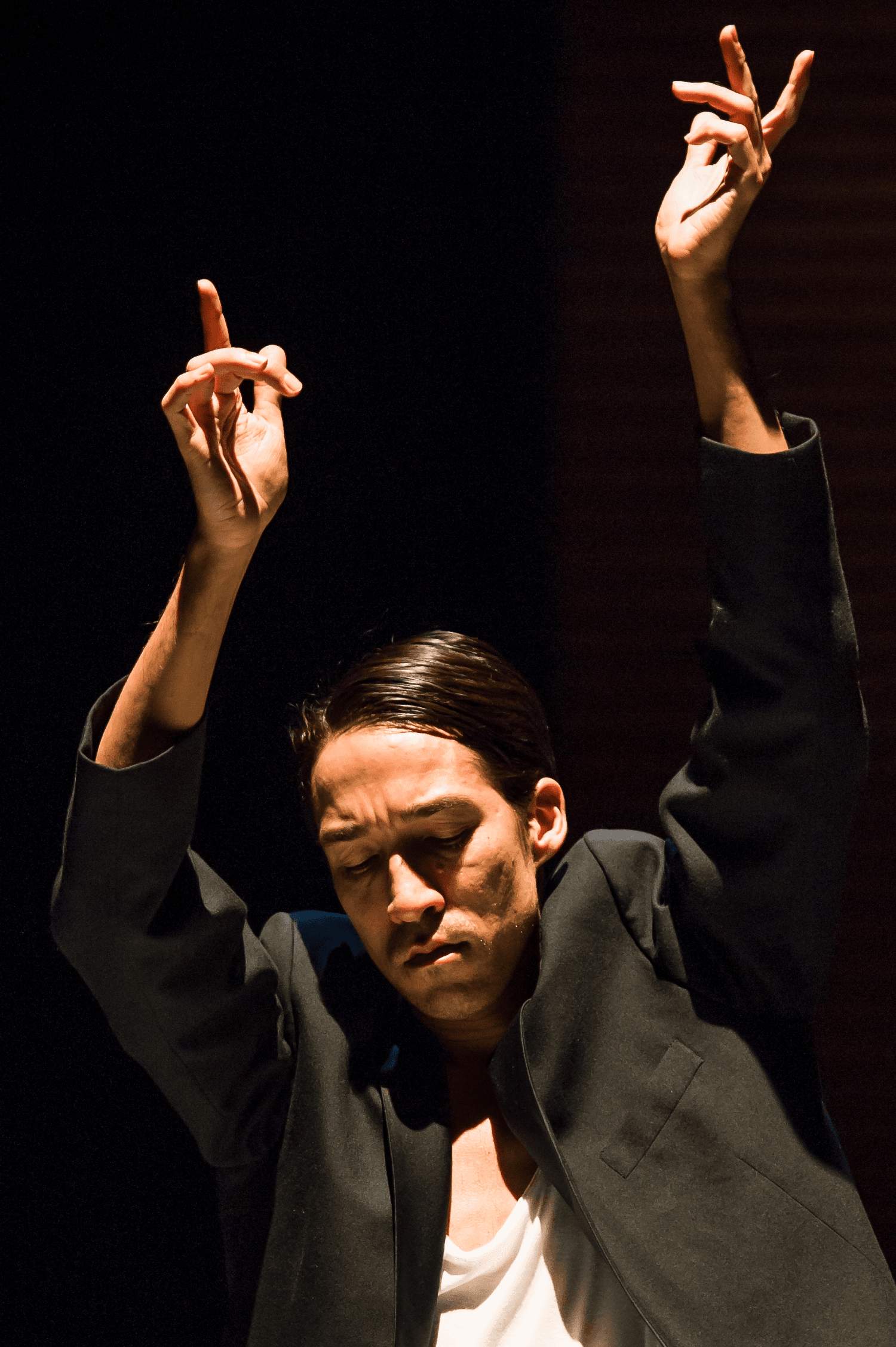
Stephen Thompson.
At one point in the performance, everything turns into a bacchanal. It was an incredible experience when the entire audience stood up and started dancing – just like at the opera house in Rio de Janeiro. Seeing how the audience absorbed the work with their own bodies, stood up and danced, was both surprising and very enjoyable. Now I wonder: what will happen this time? Will people get up, or will the music feel dated? Is this type of audience participation outdated? Can the same recipe cook the same result? That remains to be seen.
Antigone Sr: Twenty Looks, Or Paris Is Burning at the Judson Church (L) will not be shown at Dansens Hus in 2026. It has been cancelled for reasons beyond our control.