
Philip Berlin (SWE)
L’exposé
3-5 April 2025
Programme
Enter the abundance of movement and experience pleasure, emancipation, transcendence - and real intensity in an abundance of movement.
TicketsVenue
Duration
50 minutes
3 Apr
19:00
4 Apr
19:00
5 Apr
16:00
Through density, centrifugal force and expansion, waste becomes a crucial part of human existence. I L’exposé dance becomes a catalyst that embraces waste as a radical concept. Here you don't encounter waste as a societal or individual abuse, with infinite resources, but as a fundamental human drive. The choreography alternates between dissonance and assonance, flow and interruption. With a high frequency of movements and glitches, constantly changing direction, intention, character and energy - and a set design and conceptual world inspired by everything from Renaissance costumes, Merce Cunningham's software DanceFormsFrom the musical universe of Hildegard of Bingen to post-punk concerts - a sensory overload is created that concretises the idea of inevitable, liberating abundance.
"Dancing is a spiritual exercise in a physical form"
Merce Cunningham
Through the dance, the waste takes on a physical form that vibrates through movement between precision and chaos, weight and intensity. Here - in the abundance of movement - an endeavour arises for the dancer spirit, where every step becomes an activity of life's excesses. L’exposé does not look for a solution, neither in the absence of anything, nor in the promises of consumerism, but sees waste as an inevitable part of life - even a powerful and fundamental part of existence. The choreography was developed using an analogue version of Merce Cunningham's software DanceForms, with an interest in creating a complex composite movement material that weaves together the various components of dance into an unpredictable yet organic system of abstract movements. The dancers move rapidly and elastically through space, in complex and multiple trajectories, embodying concepts of centrifugal force, acceleration and expansion.
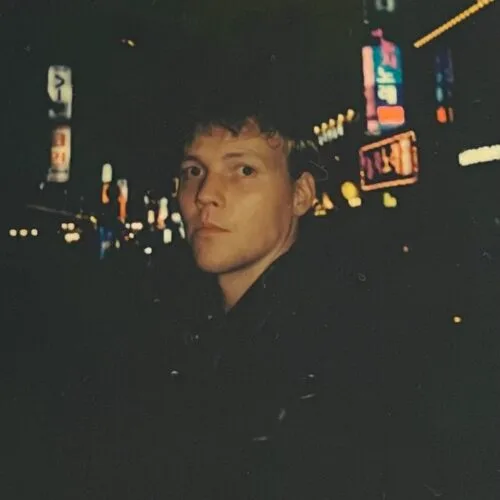
About Philip Berlin
Philip Berlin is based in Stockholm and works with dance in Sweden and internationally. Berlin has shown works at Théâtre de la ville, Dansens Hus, Oslo Opera House, MDT and Moderna Museet.
Berlin has been a regular artistic collaborator with Cristina Caprioli, and was involved in the creation of 'Omkretz' which was staged at MoMA PS1 New York, Annenberg Center Philadelphia and Fabbrica Europa Florence.
Berlin has collaborated with Gisèle Vienne and toured internationally with the production 'Crowd'. He has also worked with Ballet de Lorraine, dancing in works by Merce Cunningham, Mathilde Monnier, William Forsythe, Tero Saarinen, Faustin Linyekula and Maria La Ribot, among others. He has also danced in works by Björn Säfsten, Mårten Spångberg, Frédéric Gies and Mats Ek.
In 2014-2019, together with Ulrika Berg, Cristina Caprioli and Anna Grip, he initiated the project SUNDAY RUN UP - a context that brought together artists working in literature, choreography, music and visual arts. A project is emerging to create space for artistic practices and social processes.
Philip Berlin's sources of inspiration
In its work with The presentation Philip Berlin looked at various sources, including choreographer Merce Cunningham's computer programme 'DanceForms' and the musical universe of composer, author and abbess Hildegard of Bingen. Below you can read a little more about who they were.
Merce Cunningham (1919-2009) was an American choreographer and dancer, who worked at the forefront of the American avant-garde for over 50 years. Cunningham is considered one of the foremost choreographers of contemporary and modern dance. Cunningham founded his own dance company in 1953 and through it created hundreds of unique choreographic works. Cunningham's dance works were often defined by precision and complexity, combined with intense physicality and theoretical approaches. In many of Cunningham's works, the limitations of the stage were often renegotiated and the roles of dancers and audience were questioned - an approach considered groundbreaking for its time.
During the 1980s and 1990s, Cunningham developed the computer program DanceForms - a digital tool for visualising and creating choreographic movements. Motion Capture (a tool created to record, with high precision, the movements of objects and/or people) was integrated into the program, allowing real human movement to be visualised in the program.
Hildegard of Bingen (1098-1179) was an abbess, composer, mystic, preacher and writer in the Middle Ages. Educated in a range of fields, she wrote books as well as music, preached and founded monasteries. The attention paid to women in the medieval Catholic Church in recent decades has led to a general interest in Hildegard's music. In addition to the Ordo Virtutum, a musical drama, over 69 musical compositions are attributed to Hildegard, each with its own original poetic text, making Hildegard one of the most numerous composers of the Middle Ages.
Choreographer Philip Berlin in conversation after the performance L’exposé with Mathias Wåg, journalist and activist.
Choreography
Philip Berlin
Set, costume and lighting design
Daniel Åkerström-Steen
Dancers
Louise Dahl, Jim De Block, Madeleine Lindh & Sam Huczkowski
Dancers in the process
Marc Oliveras Casas
Sound design and newly composed music
Siri Jennefelt
Existing music in the performance
Kim Gordon, Panther Modern, Dirty Beaches, Modern Ruin, Miss Kittin and The Hacker & Suicide
Production
Johnson & Bergsmark
Creative technologist
Adam Seid Tahir
Tailors
Kajsa-Lisa Larsson
Documentation
Palmer Lydebrant
Residence
Culture Gävleborg
Co-production
Dansens Hus,
With the support of
The Cultural Bridge
Administration
Interim Culture
Thanks to
Anna Grip